20.10.26

Logistics Is No Longer Just About Moving Goods. It’s About Protecting Business Growth.

In today’s business environment, the real value of logistics is not measured only by how efficiently products move, but by how effectively a supply chain supports a company’s ambitions.

For a long time, logistics was primarily viewed as an operational function, move products, manage inventory, meet delivery deadlines, and keep costs under control. These objectives remain essential, but I believe the role of logistics has fundamentally changed.

Today, logistics influences much more than transportation and warehousing. It affects customer satisfaction, working capital, operational flexibility, market responsiveness, and ultimately, a company’s ability to grow and this is particularly relevant for businesses operating in consumer goods and industrial markets.

When logistics becomes a business decision

Imagine a company preparing to launch a new product, enter a new market, or respond to an unexpected increase in demand. The commercial team is ready, production is planned, customers are waiting, but is the supply chain ready? Can warehouse capacity adapt to changing volumes? Can orders be processed according to different customer requirements? Can additional services be integrated without creating unnecessary complexity? Can the logistics operation scale without compromising service quality?

These are not simply warehouse questions, but are business questions. A supply chain that cannot adapt can become a barrier to growth, even when the product and market opportunity are excellent. On the other hand, a flexible and well-designed logistics operation can help a company respond faster, serve customers better, and pursue opportunities with greater confidence.

One supply chain, different challenges

Consumer goods and industrial businesses may operate in very different markets, but they share an important challenge: their logistics requirements rarely remain static. In consumer goods, product launches, seasonal peaks, changing distribution channels, and evolving customer expectations demand speed and flexibility.
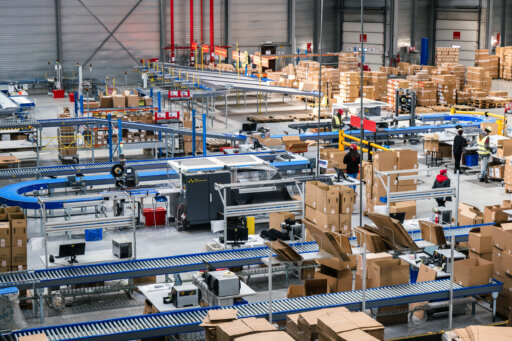
In industrial environments, production continuity, component availability, precise material flows, and reliable coordination can be critical to operational performance. There is no universal solution that fits every company. The right approach starts with understanding the product, the business model, the customer, and the operational challenges. Only then can processes, infrastructure, technology, and value-added services be designed around real business needs. This is where collaboration between the customer and the logistics partner becomes essential.

From supplier to strategic partner

In my view, the most valuable logistics relationships begin before a warehouse is selected or a transport rate is negotiated. They begin with questions.

  • What is the company trying to achieve over the next three to five years?
  • Where are the biggest operational constraints today?
  • Which activities consume resources without creating sufficient value?
  • What will happen if volumes double, demand changes, or the business expands into new channels?
  • And perhaps most importantly, how can logistics support these ambitions rather than simply react to them?

A genuine logistics partnership requires open communication, shared objectives, operational expertise and a willingness to continuously challenge existing processes. Technology and automation can make a significant contribution, but they are not the starting point. The starting point is understanding the problem that needs to be solved. The best solution is not necessarily the most sophisticated one. It is the one that delivers measurable value for the customer.

A thought for Italian businesses

Italy has a strong industrial and consumer goods base, with companies competing in markets where quality, service and reliability matter. For businesses looking to strengthen their competitiveness, supply chain decisions deserve the same strategic attention as commercial development, production planning, and customer acquisition. Logistics should not be considered only when costs need to be reduced or operational problems arise. It should be part of the conversation when companies plan to grow, improve service, expand their distribution, or build greater resilience into their operations. As a Business Development professional, I find this to be one of the most interesting aspects of our industry: understanding a company’s ambitions and identifying where logistics can make a meaningful difference. Because, ultimately, moving goods efficiently is only part of the equation.

The real opportunity is to turn logistics into a competitive advantage.

I’d be interested to hear your perspective:

When evaluating a logistics partner, what matters most to your business today: cost efficiency, flexibility, service quality, or the ability to support future growth?

Vincenzo Cirillo

Let’s talk

Other news articles

  • 20.03.26
    Statement Regarding Fake Video Featuring CEO Fernand Huts
    This video is a malicious deepfake and has no connection whatsoever with Katoen Natie, our CEO, or any member of our management team. We want to be absolutely clear: • Katoen Natie does not provide investment advice and we never ask the public to invest. • The statements in the video are completely untrue and should be ignored. • Our official communication is only done through our verified channels. The video has since been removed by independent IT experts. We take this case very seriously and are working with law enforcement to protect the public from this type of fraud. We strongly advise everyone to remain vigilant against online scams and to always verify the authenticity of communications before taking any action. Scam attempts can easily be recognized by: unrealistic promises about getting rich quick, pressure to act quickly, unknown websites/social media accounts.
    Read more
  • 02.12.25
    From Static SOPs to Smart Rules: Bringing Flexibility Into Warehouse Execution
    Warehousing never stands still. Volumes shift, priorities change, and customers expect information and execution that is both fast and reliable. Traditional Standard Operating Procedures (SOPs)—fixed, linear, and difficult to adjust—often struggle to keep pace with this level of variability. At Katoen Natie, we’ve moved beyond static processes to a rules-based approach in our Warehouse Management System (WMS). These smart rules translate business logic into clear, consistent actions—helping operations run smoothly even when circumstances change.

    Why Smart Rules Matter

    A flexible, rule-driven WMS brings structure without rigidity. It enables teams to work predictably and efficiently, while still adapting to new information and operational realities. Here’s what that means in practice:
    • Faster decisions, less manual work: Routine checks and validations happen automatically, reducing delays and freeing teams to focus on value-adding tasks.
    • Consistency across sites and shifts: The same inputs trigger the same outcomes, creating predictable and auditable processes.
    • Adaptability without disruption: When customer needs or priorities shift, rules can be adjusted without redesigning entire workflows.
    • Fewer exceptions: Automation handles the standard work; operators focus on the situations where human judgment matters most.

    How Our Rule-Based System Works

    Our WMS uses a layered decision model to determine what needs to happen and when. These layers guide key operational areas: Process Rules: Define which steps apply to which flows (e.g., inbound, outbound, VAS), ensuring work is executed in the correct sequence. Timing Rules: Calculate target moments—such as staging or loading times—based on commitments, constraints, and planning inputs. Document Rules: Generate and distribute the right documents automatically at the right moment, reducing guesswork and manual intervention. Routing Rules: Recommend the most suitable carrier or route based on service levels, geography, transit times, and constraints. Once the rules are configured, the system evaluates priorities and conditions whenever work is released. Tasks are then assigned to the right team, workstation, or process step—keeping operations coordinated and reducing idle time.

    What This Means for Our Customers

    A rule-driven WMS creates a more stable and predictable operational environment:
    • Clear guidance for teams: Operators always know the next correct action.
    • Faster adjustments: Operational changes can be implemented through configuration—not custom development.
    • Improved partner experience: Carriers and customers receive accurate, timely information.
    • Balanced automation: The system handles repetitive steps so people can focus where expertise is needed.

    The Bottom Line

    Smart rules turn operational complexity into clear, manageable workflows. They don’t replace people—they empower them. By combining automation with operational control, we provide a warehouse environment that is scalable, reliable, and adaptable across industries, markets, and customer requirements. Speak with an expert today to learn how we can make the difference in your supply chain
    Read more
  • 17.10.25
    Effortless Document Sharing for Modern Supply Chains
    Logistics runs on information — and documents are a big part of that story. Getting them where they need to go, instantly and reliably, keeps everything else moving. Customers, carriers, and authorities expect immediate access to the right documents, in the right format. At Katoen Natie, we’ve reimagined how documents move through the supply chain, making it easy to share information, eliminate paper, and keep operations running smoothly.

    Simplifying Document Management

    Our document sharing solutions ensure all critical information — from packing lists and invoices to customs declarations and labels — flows seamlessly between all stakeholders. Here’s how we make it work for you:
    • Flexible document intake: Upload documents directly, connect your systems via API, or integrate with existing tools. We adapt to your workflow, not the other way around.
    • Centralized access: All documents are stored securely in one place and linked to their corresponding orders — no more digging through folders or email chains.
    • Automated sharing: Distribute packing lists, delivery notes, or invoices automatically to customers, carriers, or customs authorities through secure digital channels.
    • Connected delivery: Our platform supports multiple connection options — including API, email, and other secure integrations — so your partners receive what they need, exactly when they need it.
    • Digital access anywhere: Using tools like Twintag, a simple QR scan on a parcel or pallet gives authorized users instant, secure access to all relevant documents.

    How It Works in Practice

    Once your documents are in our system, our platform automatically routes them to the right recipients — whether that’s a carrier, customs office, or end customer — based on your preferences. This eliminates manual handling, reduces delays, and ensures compliance across your entire supply chain.

    The Result: Simplicity, Accuracy, and Speed

    By streamlining document management, you’ll experience:
    • Faster setup and smoother operations: Your documents are always where they need to be.
    • Fewer mistakes and delays: Automatic delivery reduces lost documents and manual follow-up.
    • Happier partners and customers: Everyone receives the correct documents on time, maintaining flow and trust across the supply chain.

    From Chaos to Clarity

    At Katoen Natie, our document storage and exchange solutions combine automation, accessibility, and security — giving you full visibility and control over every document that drives your logistics process. Ready to simplify document management? Let’s talk about how we can help your business deliver faster, smarter, and with total confidence — no matter how complex your supply chain.  
    Read more
  • 10.09.25
    Unlocking Operational Excellence: APIs as the Backbone of Supply Chains

    Today’s supply chains run on speed, transparency, and agility. APIs (Application Programming Interfaces) are at the heart of this, connecting your systems directly with our warehouse operations.

    APIs act as bridges between systems, enabling real-time data exchange across warehousing and transport. Orders can be updated instantly, inbound shipments confirmed on arrival, and inventory kept accurate with automatic notifications when changes occur. This seamless flow of information helps teams respond quickly, reduce errors, and keep customers informed without the back-and-forth.

    At Katoen Natie, we’ve expanded our API program. The result? Our customers enjoy more control, faster responses, and less manual work—helping them deliver on their promises, even when the unexpected happens.

    What Our APIs Offer

    Our API portfolio covers every critical aspect of warehouse and supply chain integration, giving you the tools to connect, automate, and optimize your operations:

    • Orders – Update or cancel order lines instantly.

    • Inbound – Receive confirmations and live updates on arriving goods.

    • Inventory & Stock – Access real-time stock levels, lot numbers, and country of origin.

    • Stock Adjustments – View and track corrections immediately.

    • Notifications – Get alerts when something changes, with the option to retrigger missed messages.

    Our APIs are designed to be intuitive and reliable, supporting everything from day-to-day transactions to exception handling—so your teams can focus on what matters most..

    Built for People, Not Just Systems

    Technology should support people, not complicate their work. That’s why our APIs are:

    • Supported by a developer portal and safe test environment.

    • Backed with clear documentation and examples to speed up setup.

    • Maintained with structured updates to ensure stability as new features are added.

    For non-technical users, the impact is simple: fewer emails, fewer delays, and more focus on customers.

    Reliable by Design

    Our APIs are secure, stable, and supported — even during peak periods. Customers already using them see tangible benefits:

    • Real-time updates enabling faster decisions.

    • Reduced manual work through automated workflows.

    • Greater agility to handle last-minute changes.

    The result is stronger service levels and a more competitive supply chain.

    Ready to Build Smarter?

    As logistics evolves, APIs are more than a technical tool — they are the foundation of connected supply chains. At Katoen Natie, our API program reflects our commitment to long-term partnerships, helping customers adapt quickly and deliver with confidence.

    Speak with an expert to explore our API portal and sandbox environment to start integrating today.

    Read more
Load more